The 30–60 Minute Sweet Spot
Theme park rides break down all the time. When they come back, the line is temporarily empty. We analyzed 86,500+ breakdowns to figure out exactly when your odds of walking right on are best.
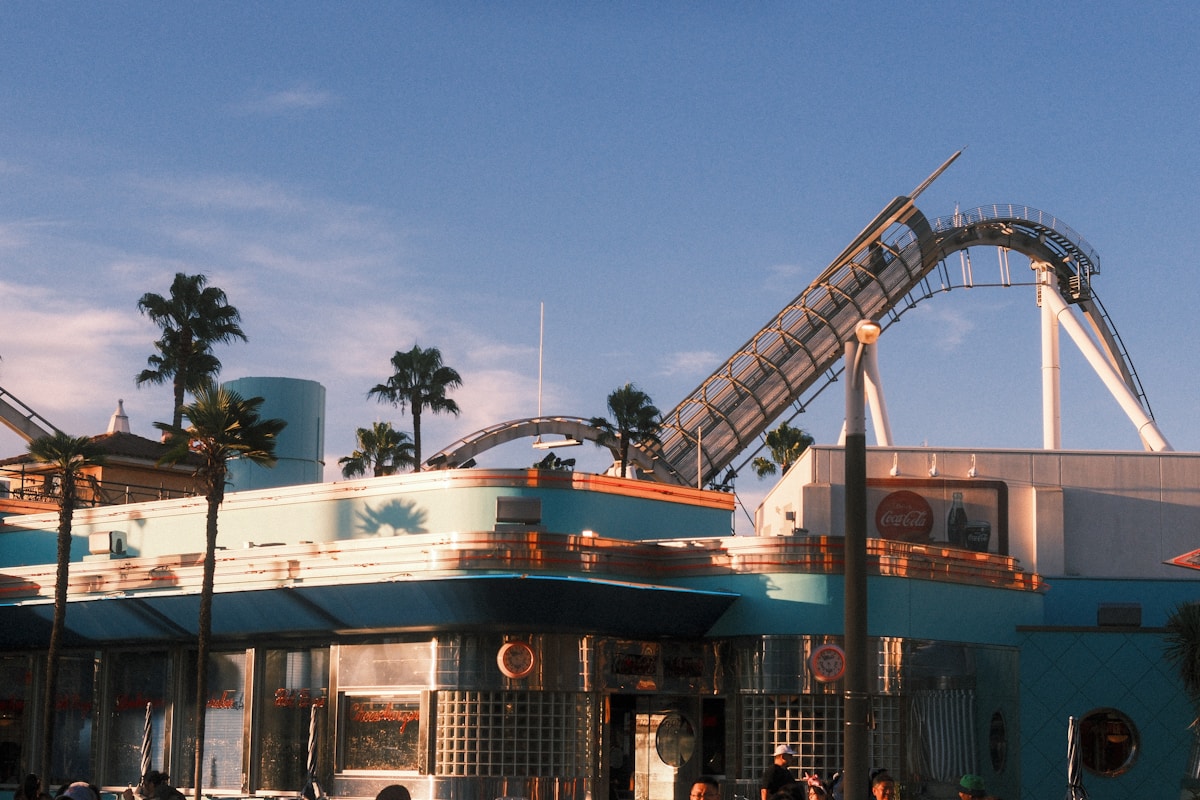
What Happens When a Ride Breaks Down?
It happens more than you'd think. A ride temporarily closes, maybe because a sensor trips, a lap bar doesn't lock, or a vehicle needs a quick reset. At most parks, these aren't dramatic failures. They're routine pauses that happen dozens of times a day, lasting anywhere from a few minutes to a couple of hours.
Here's what most guests don't realize: when a ride goes down, people leave the line. Some go grab food. Some hop on a different ride. Some just wander off. By the time the ride quietly comes back online, that 90-minute queue has evaporated.
For a brief window after reopening, you can often walk right on, or close to it. That's the walk-on window.
It's 2 PM at Magic Kingdom. You check the app and see Space Mountain has a 90-minute wait. You'd normally skip it.
But then your phone buzzes: Space Mountain just reopened after a 40-minute breakdown. Current wait: 10 minutes. You're 6 minutes away.
You walk over. You walk on. Everyone else is still in line for Thunder Mountain.
The question is: how long does that window last, and which breakdowns actually create one? That's what we set out to answer.
This Happens Way More Than You'd Think
We've been tracking ride status across 11 Disney and Universal parks since 2018 through our sister site, ThemeParkHallOfShame.com. In 2025 alone, we recorded over 86,500 individual ride breakdowns.
That includes Disney, Universal, Six Flags, Cedar Fair, SeaWorld, Busch Gardens, Hersheypark, Dollywood, Legoland, and more. On a typical Disney vacation spanning 3–4 parks over several days, you'll be in the park during dozens of breakdowns. Each one is a potential walk-on, if you know about it.
Not All Breakdowns Are Equal
Here's the part that surprised us. You'd assume that any breakdown creates a walk-on opportunity. It doesn't. How long the ride was down completely changes what happens when it comes back.
Down Less Than 15 Minutes
The ride was barely down. Most people in the physical queue just waited it out. They didn't even leave. When the ride comes back, the line is just as long as before, and wait times often spike even higher as the ride works through the backlog.
Down 30–60 Minutes
This is where the magic happens. Thirty minutes is long enough that most people have given up and moved on. The physical queue is genuinely empty. The ride comes back quietly, and for the next 15–30 minutes, wait times drop well below normal. This is the walk-on window at its widest.
Down Over 60 Minutes
The queue is empty, yes, but by now, the whole park knows the ride was down. When it comes back, the ride restarts at reduced speed (safety checks, test runs), and everyone rushes over at once. If you're nearby, you can still catch a short wait, but the window closes fast and wait times often overshoot normal levels.
What the Data Actually Looks Like
The chart below shows what happens to wait times in the 90 minutes after a ride reopens, broken down by how long the ride was down. The line shows how much higher or lower the wait is compared to what's normal for that time of day. Below zero means shorter waits than usual.
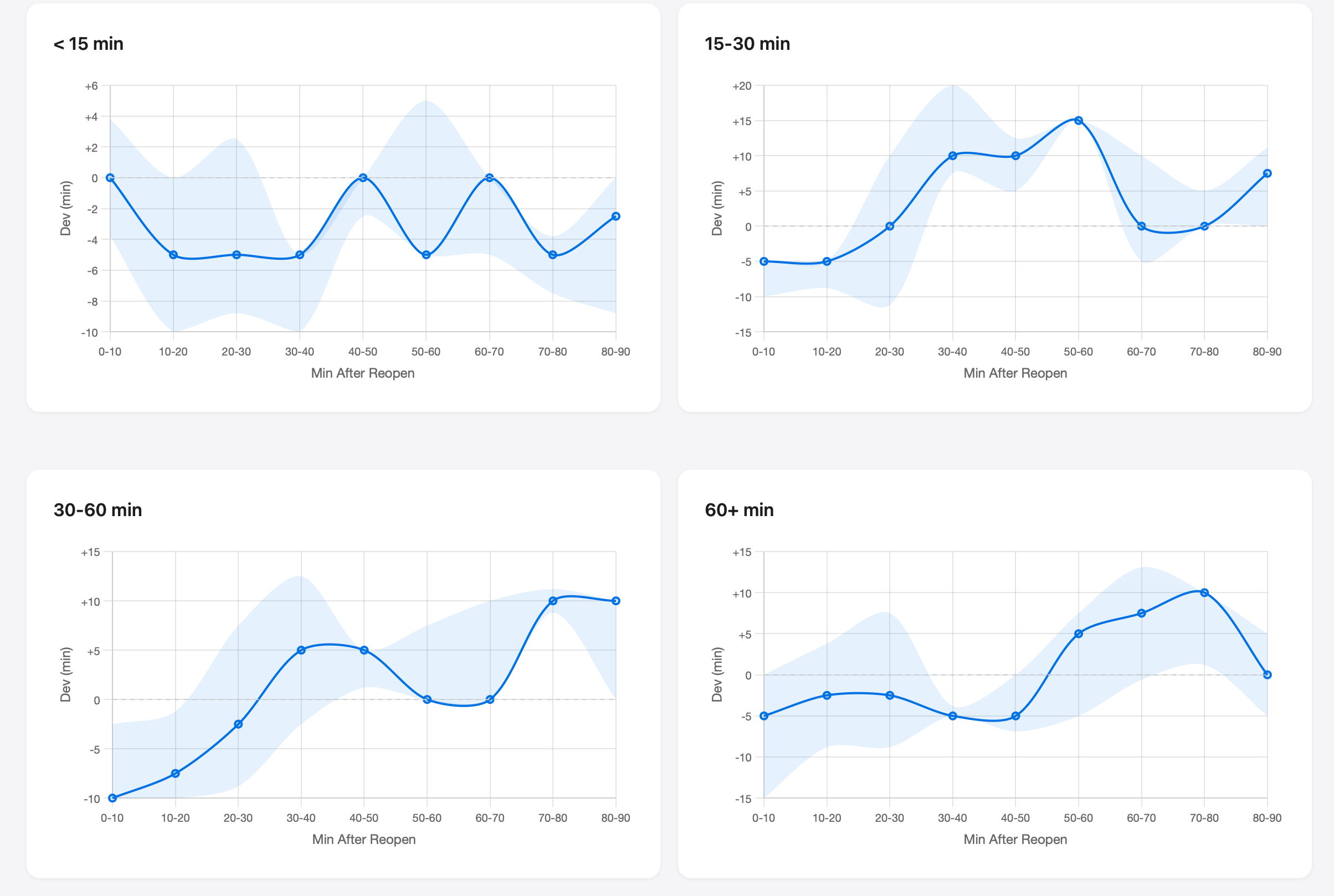
How wait times compare to normal in the 90 minutes after a ride reopens • Aggregated across all tracked rides • Below zero = shorter than usual
Look at the 30–60 min panel. Right after reopening, wait times plunge about 10 minutes below normal: that's your walk-on window. It gradually closes over the next 20–30 minutes as word spreads and the line rebuilds.
Now compare that to under 15 min: the line barely moves because nobody left. And 60+ min: it starts low, but the recovery is jagged and unpredictable, with reduced ride capacity and a rush of guests fighting each other.
Why Does This Happen?
Several things work together to create (and close) the walk-on window:
- The posted wait isn't a stopwatch. The wait time you see in the app isn't just measuring who's physically in line. Disney's system factors in expected demand, Lightning Lane returns, and ride capacity. So even when the physical queue is empty, the posted wait might not show "5 minutes" right away.
- Long breakdowns happen during the busiest hours. Rides are under the most stress when they're running at full capacity. So a 60+ minute breakdown tends to happen at 2 PM, not 9 AM, which means the ride reopens into peak-hour crowds.
- Rides don't come back at full speed. After a long breakdown, the ride goes through test cycles and starts dispatching vehicles more slowly. Even a small line produces a big posted wait when the ride is running at half capacity.
- Lightning Lane holders come back. Guests who had Lightning Lane reservations during the breakdown get priority access when the ride reopens. This fills some of the empty queue before standby guests even arrive.
Every Ride Recovers Differently
Everything above is the big picture, averaged across all rides. But in practice, every ride has its own pattern. A flagship coaster that handles 2,000 riders per hour recovers completely differently from a gentle spinner with 800.
That's why we build a separate model for every single ride we track. Here's what one looks like:
Chances of Having a Low Wait Time
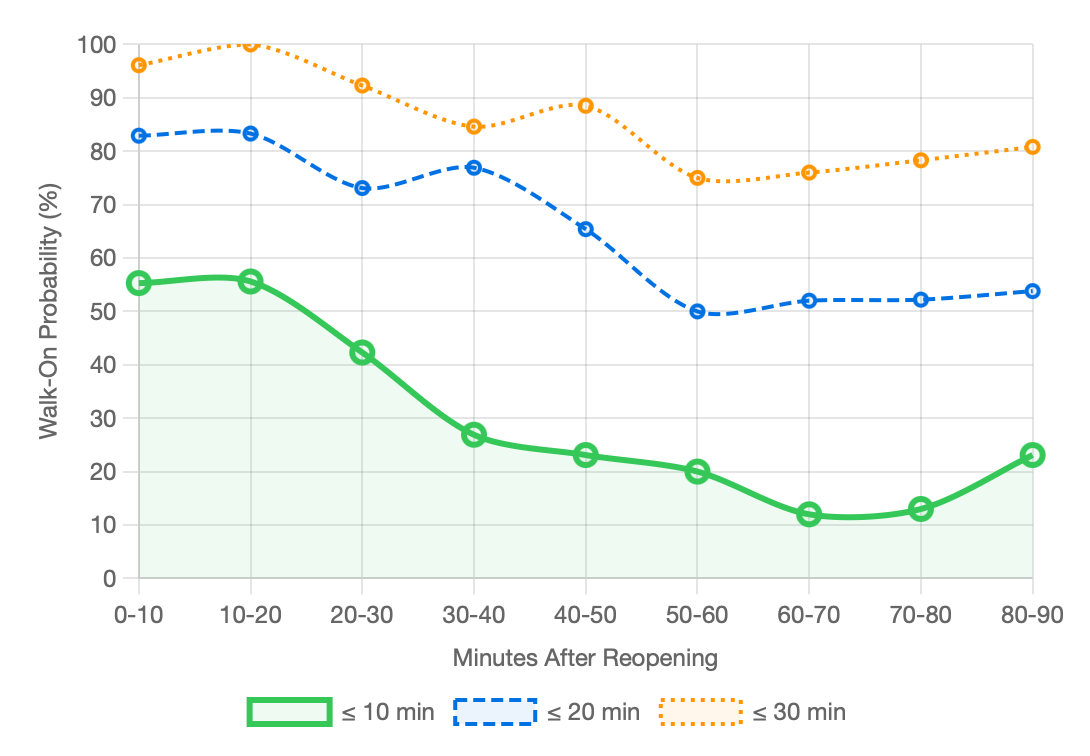
Astro Orbiter, Walt Disney World • One of hundreds of per-ride models we compute
This chart answers a simple question: after this ride reopens, how long do I have before the wait climbs back up? The three lines show different wait thresholds (under 10 minutes, under 20, under 30). The further right you go on the timeline, the less likely you are to still find a short wait.
We generate this for every ride with enough breakdown history across Disney, Universal, Six Flags, Cedar Fair, SeaWorld, Busch Gardens, and more. Each model reflects that specific ride's recovery pattern, crowd dynamics, and capacity, not a generic average.
How WalkOnAlerts Uses This
WalkOnAlerts turns all of this into a real-time notification on your phone. When a ride breaks down, we start the clock. When it reopens, we check the breakdown duration and that ride's specific recovery model, then tells you whether the walk-on window will save you time in line. There are even a few rides with very regular downtime patterns. Most rides have breakdown patterns that are purely random, but If there's a high confidence that a ride will open in the next 10 minutes we'll alert you if you have the I'm feeling lucky option turned on.
And if you're already in line when a ride goes down, the Stay or Go feature tells you what to do. It looks at how long the ride has been down, checks the historical pattern for that ride at that time of day, and gives you a straightforward recommendation: stay in line because it's likely coming back soon, or leave and ride something else while we watch it for you.
No guesswork. No refreshing the app every 30 seconds. Just a notification when it matters, with the context to act on it.
What This Means for Your Next Trip
If you visit a Disney or Universal park for even one day, you'll be there during multiple ride breakdowns. Most guests never notice them. The ones who do just see "Temporarily Closed" in the app and move on.
With WalkOnAlerts, every one of those breakdowns becomes a chance to skip the line. Over a multi-day trip, that can add up to hours of saved wait time: hours you spend on rides instead of in queues.
Stop guessing. Start walking on.
Get WalkOnAlerts